Every week you can find the best discounts here.
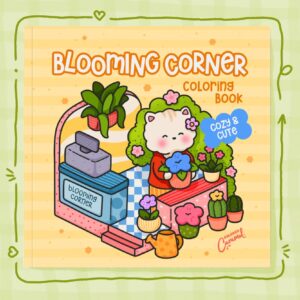
Blooming Corner: Cozy & Cute Coloring Book
What to Look For in an Adult Coloring Book (Paper, Binding, Themes)
You already know adult coloring is calming. What nobody tells you is that the book itself makes or breaks the experience. A gorgeous illustration printed on the wrong paper will frustrate you within ten minutes. A cover you love that’s bound wrong will crack along the spine the first time you try to color it flat.
This is a practical, no-fluff guide to what actually matters when you’re choosing an adult coloring book — written by an indie illustrator who makes them. Whether you’re buying your first book or your tenth, these are the six things to check before you add to cart.
1. Paper weight matters more than page count
A quick note from me: I have been illustrating and self-publishing coloring books for several years now. Every recommendation in this post comes from testing dozens of paper types, binding methods, and coloring tools on my own designs before they ever reach a customer. I have ruined more prototype pages with Copic markers than I care to admit.
A 100-page coloring book on 80 gsm printer paper is worse than a 50-page book on 160 gsm cardstock. Here’s why: bleed-through. The moment you use anything juicier than a basic colored pencil — alcohol markers, watercolor pencils, watercolor markers, fineliners — the ink soaks straight through thin paper and onto the next design.
What to look for:
| Paper weight | Good for | Avoid for |
|---|---|---|
| 80–100 gsm | Basic colored pencils only | Any marker |
| 120–150 gsm | Colored pencils, fineliners | Alcohol markers |
| 160–200 gsm | All tools including most markers | Very wet media |
| 250+ gsm (cardstock) | Watercolor, wet media | Overkill if you only use pencils |
If the listing doesn’t state the GSM, that’s a warning sign. At Colored Caramel we print on 160 gsm so you can use the full range of coloring tools without worrying about ruining the next page. If a book you’re considering doesn’t mention paper weight at all, email the publisher and ask — the answer (or the silence) tells you everything.
2. Single-sided pages are the quiet superpower
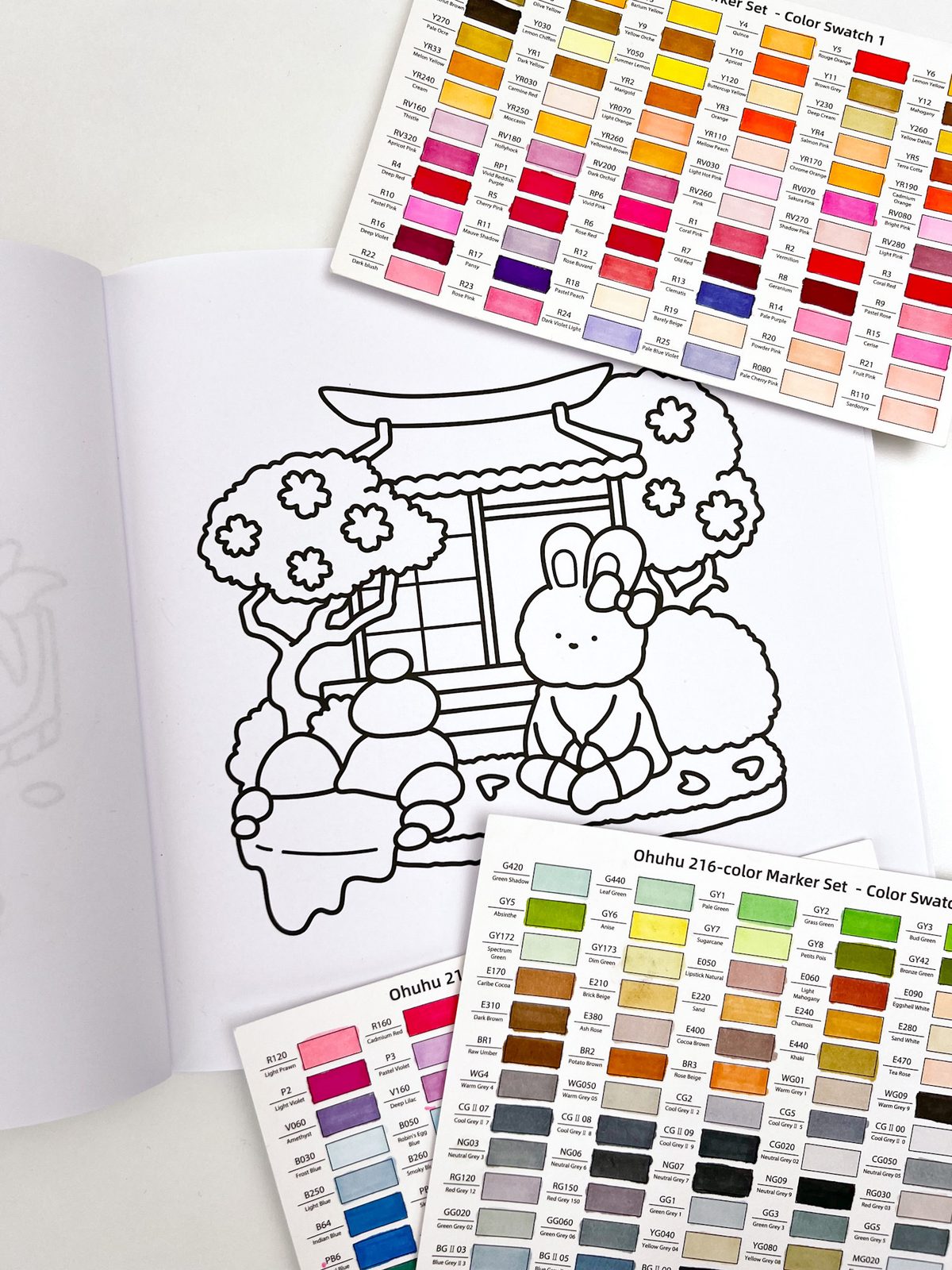
Double-sided printing is cheaper to produce, but it forces a compromise: whatever you use on one side affects the other. Even on 160 gsm paper, alcohol markers can show shadows through the page.
Single-sided pages mean the back of every illustration is blank. That blank space matters for three reasons:
- You can slide a blotter sheet behind the page to catch any bleed-through without wasting an illustration underneath
- You can tear the finished page out cleanly to frame it, scan it, or give it as a gift
- Your markers are free to be as wet as they want
Yes, single-sided books have half the illustrations per physical page count. It’s worth it.
3. Binding type decides whether you can actually use the book
Honestly? I switched to lay-flat binding after a customer emailed me a photo of her Kawaii Daydream copy with a cracked spine. She had been pressing it flat with a heavy book while coloring, and the spine gave out on page 12. That was the last perfect-bound book I ever made.
 Spooky Cats cute and cozy coloring book cover by Colored Caramel” class=”wp-image-30234″ loading=”lazy”/>
This is the most under-discussed factor. A coloring book has to lie completely flat when open — otherwise you’re fighting the spine every time you try to color near the gutter (the inside edge of the page). Most buyers don’t realize this until they’re halfway through a design that disappears into a crease they can’t flatten.
Binding types ranked for coloring:
- Spiral / wire-O binding — Lies perfectly flat. Pages can fold all the way back. Best for coloring. Minor downside: not as pretty on a shelf.
- Lay-flat / softcover with double hinge — The good kind of softcover. You’ll know it when you see it: opens flat without force.
- Standard perfect-bound softcover — The most common and the worst for coloring. Pages fight you, especially in the middle of the book.
- Hardcover — Usually stunning but often impossible to flatten. Great to own, hard to color.
Look for the phrase “lies flat” or “lay-flat binding” in the product description. If the seller doesn’t mention it and the book isn’t spiral-bound, assume it doesn’t.
4. Theme and style fit matter more than “difficulty level”
 Cozy Kitchen sweet bold and easy coloring book cover by Colored Caramel” class=”wp-image-30235″ loading=”lazy”/>
Every adult coloring book claims to be “intricate” or “for beginners” but those labels don’t actually tell you anything useful. What matters is:
- Do you love the style? You’ll spend hours with these pages. If the illustration style doesn’t spark something in you, you won’t finish the book.
- Is the subject matter in your comfort zone? If cute and cozy is your aesthetic, you’ll burn out on hyper-detailed mandalas. If you want meditative repetition, you’ll be bored by cartoon characters. Pick your lane.
- Does the complexity match your mood? Some days you want 200-line detail. Some days you want chunky bold shapes you can fill in ten minutes. A good coloring book collection has both.
The cute/kawaii genre (including “cozy” and “pastel goth” — all the things Colored Caramel makes) sits in the “bold lines, medium detail, lots of personality” space. That’s a different experience from traditional mandala books and different again from photorealistic adult-coloring books.
5. Compatibility with your favorite tool
Before buying, know what you’ll color with. Then check the book’s compatibility:
- Colored pencils — work on almost every coloring book. No special requirements.
- Gel pens — work on most paper but smudge on glossy finishes. Matte paper is safer.
- Fineliners — check paper weight (100+ gsm is fine)
- Watercolor markers — need 200+ gsm ideally, 160 gsm if you’re gentle
- Alcohol markers (Copic, Ohuhu, etc.) — need thick paper AND single-sided pages. Non-negotiable.
- Watercolors (liquid or pencil) — need watercolor-grade paper (250+ gsm)
If a product listing doesn’t specify what tools it’s designed for, default to assuming it’s only safe for colored pencils.
6. Does the illustrator actually color themselves?
This sounds weird but it’s a signal. Coloring books made by people who actually sit down and color tend to have:
- Well-spaced linework (not every micro-gap is filled — you need room to blend)
- Backgrounds that are separable from foreground (so you don’t accidentally color the wrong thing)
- Testing done on the actual final paper and binding before printing
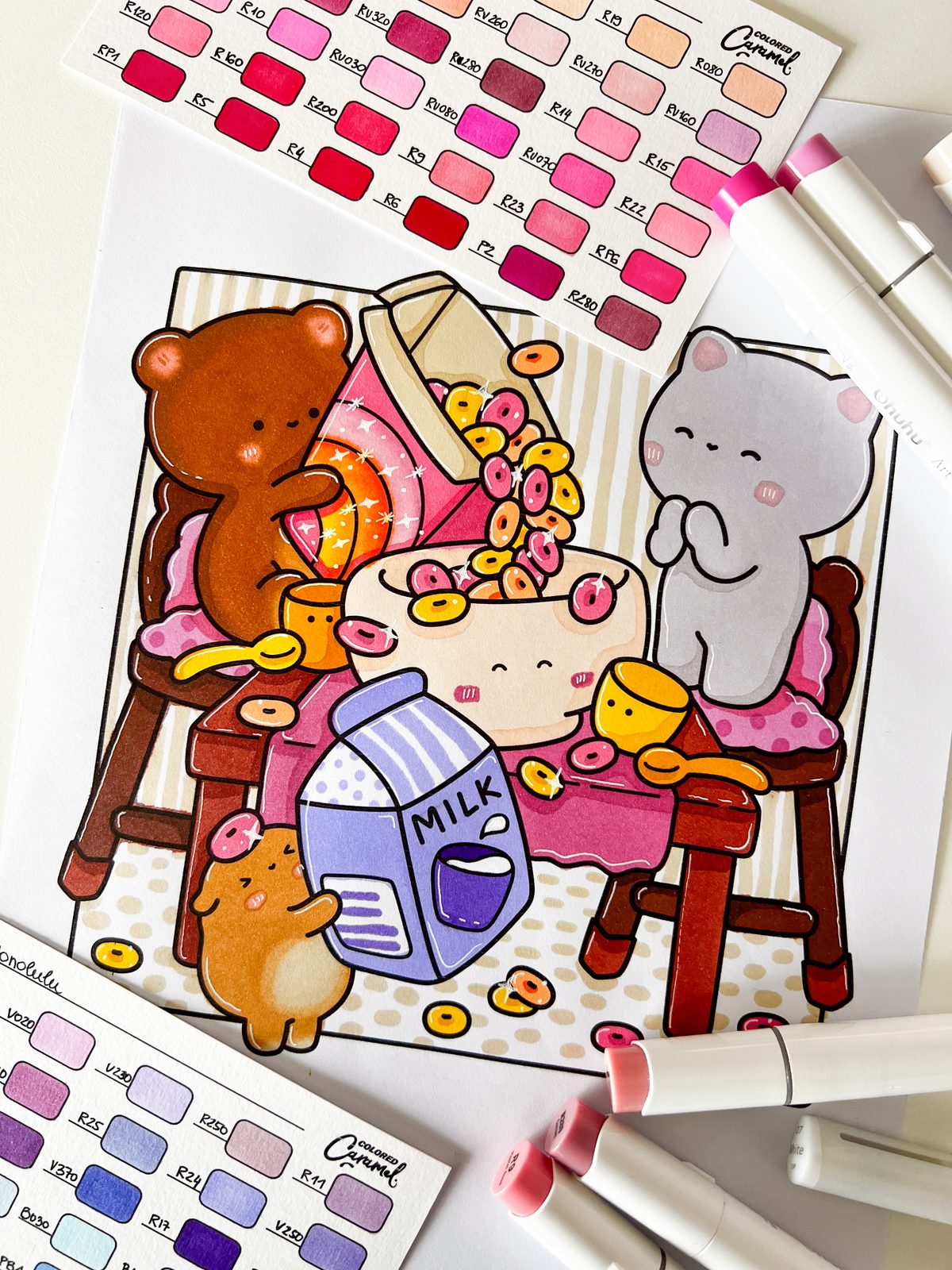
Mass-produced coloring books from huge publishers sometimes skip this step. Indie illustrators — the people whose entire shop is coloring books — usually don’t, because they color their own designs constantly. When buying, check whether the publisher also posts finished colored pages of their own work. If yes, that’s a green flag. If they only post the uncolored outlines, the book might not have been stress-tested.
Why coloring works at all (the research)
A note on the “calming” part, since it’s usually overstated. Adult coloring is not therapy and won’t cure anxiety. What it does do, according to research from Curry & Kasser (2005) and subsequent studies, is lower state anxiety in the moment of the activity — similar to how a guided meditation works, because coloring occupies your visual attention and motor cortex simultaneously, leaving less bandwidth for rumination.
So: it works, but the mechanism is attention-capture, not magic. Which means the book you pick needs to be engaging enough to actually hold your attention. A book that bores you defeats the purpose.
Quick checklist
Before you buy, confirm:
- [ ] Paper weight is stated and is at least 120 gsm (160+ if you use markers)
- [ ] Single-sided pages (for any marker use)
- [ ] Binding is spiral, lay-flat, or explicitly states “lies flat”
- [ ] The illustration style genuinely appeals to you (not just because it’s popular)
- [ ] The seller knows their tools (listing mentions compatibility)
- [ ] You can see finished examples colored by the illustrator or real users
- [ ] Return policy covers “not as described” if any of the above is wrong
If you want to see what different coloring styles look like in practice, check out our guide to watercolor markers or the alcohol marker blending tutorial — both show real coloring on our actual paper so you can see what to expect.
Frequently Asked Questions
What paper weight is best for adult coloring books? 160–200 gsm is the sweet spot. It’s thick enough to handle alcohol markers and watercolor markers without bleed-through, without being so heavy that the book becomes hard to handle.
Are single-sided or double-sided coloring books better? Single-sided. Double-sided saves on cost but forces compromises — bleed-through is visible even on thick paper, and you can’t tear out finished pages without losing the illustration on the back.
What binding type should an adult coloring book have? Spiral or lay-flat binding. Both allow the book to open completely flat, which is essential for coloring near the inside edges of pages. Standard perfect-bound softcovers don’t lie flat and make coloring near the gutter difficult.
Can you use alcohol markers on any adult coloring book? No. Alcohol markers need single-sided pages printed on paper that’s at least 160 gsm (ideally 200+). On thinner paper, they bleed through and ruin the next illustration.
Does adult coloring actually help with anxiety? Research suggests it lowers state anxiety in the moment of the activity — similar to guided meditation — by occupying your visual and motor attention. It’s not a replacement for therapy, but as a daily wind-down ritual it has measurable calming effects.
How many pages should an adult coloring book have? Page count is less important than paper quality and binding. A 40-page book on thick single-sided paper is better than a 120-page book on thin double-sided paper. Aim for 40+ illustrations and prioritize paper over quantity.
Are kawaii and cozy coloring books easier than traditional mandalas? Not necessarily “easier” — they’re a different experience. Kawaii and cozy designs typically have bolder lines, medium detail, and more character-driven compositions, while mandalas are about meditative repetition of geometric patterns. Pick based on what holds your attention, not perceived difficulty.
Where to go from here
If the checklist above eliminated most of the adult coloring books you’ve been considering, that’s the point — most books don’t meet the bar. When you’re ready to look at ones that do, start with our most-loved categories:
- Cozy Coloring Books — our core collection, designed for daily wind-down time
- Kawaii Coloring Books for Adults — cute hand-drawn characters, bold lines
- Pastel Goth Coloring Books — spooky cute, still cozy
- Halloween Coloring Books for Adults — seasonal collection updated annually
- Christmas Coloring Books for Adults — chibi girls, gnomes, snow globes
Every Colored Caramel book is printed on 160 gsm single-sided paper with lay-flat binding, tested with alcohol markers and watercolor markers before going to print, and colored by the illustrator herself on a weekly basis so we know what actually works.
Related reading
- What Is a Cozy Coloring Book? — the genre that matches slow evenings
- Coloring for Stress Relief — a practical daily-ritual guide
- How to Use Watercolor Markers — without muddy blends
- Free Kawaii Coloring Pages — printable pages to try before you buy